
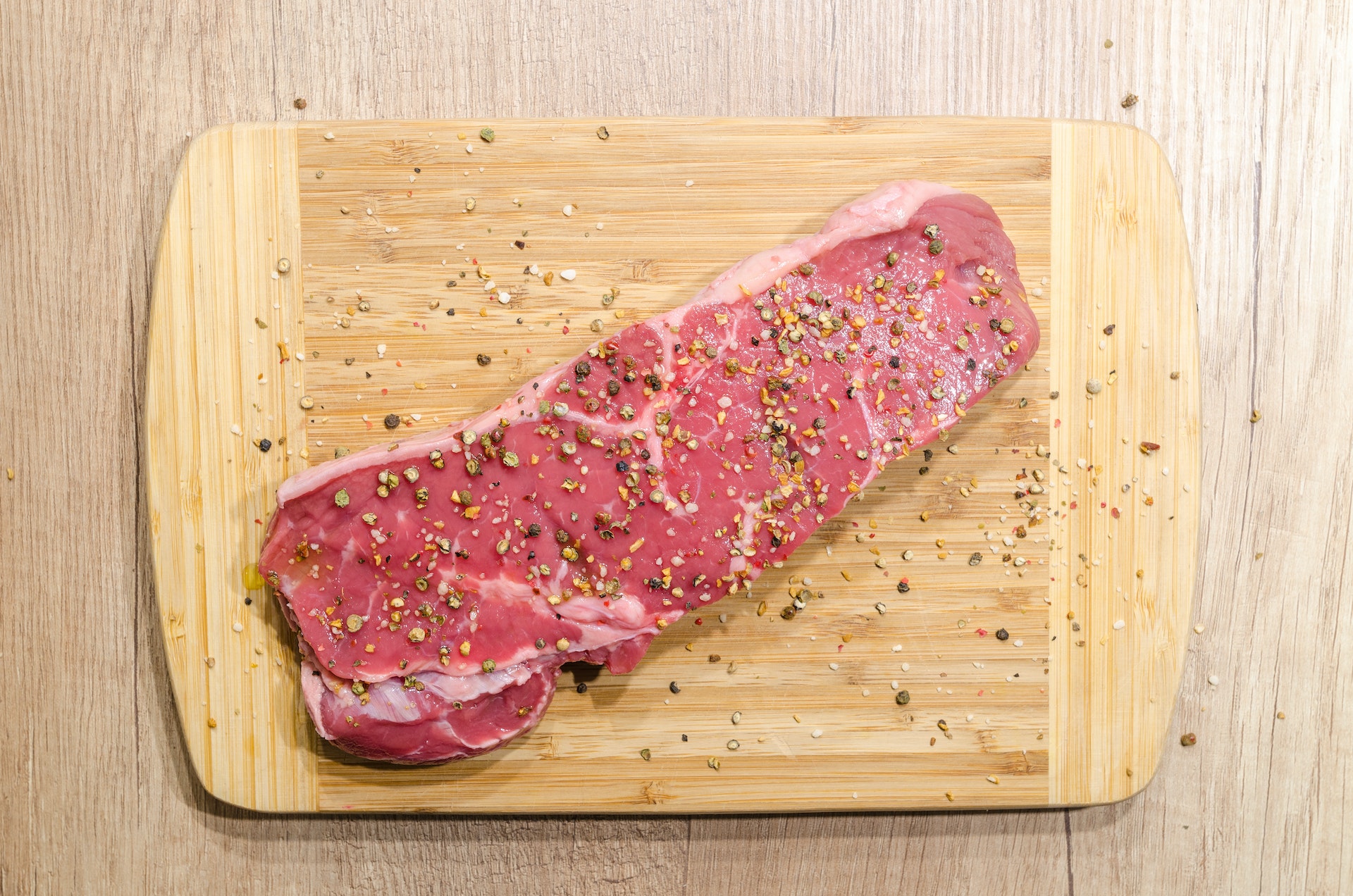
The best way to make steak easier to chew depends on the cut and how you plan to cook it. Pounding, marinating, salting, cooking, and slicing do different jobs. Choose a method that fits your steak instead of applying every treatment to every cut.
Start with the cut
Ribeye, strip, and tenderloin are grilling cuts; pounding is not a required first step. Flank and skirt benefit from attention to the direction of the muscle fibers. Cuts such as chuck arm roast and brisket call for a different cooking approach. Match preparation to the cut before choosing a tenderizing method.
1. Pound gently with a mallet
For a recipe that calls for pounding, place the steak between sheets of food-safe plastic wrap on a clean cutting board. Use the mallet’s flat face to even out thickness or its textured face to tenderize. Work with light, controlled strokes and stop before tearing the meat. Follow the recipe’s target thickness rather than aiming for one thickness for all steaks. These steps follow mallet-use instructions and the purpose of the two faces.
A needle or blade tenderizer is different: it punctures the steak and can carry surface bacteria inside. Check packaged beef for a mechanically, needle, or blade tenderized label and follow its cooking instructions. USDA explains this safety risk.
2. Use a marinade with realistic expectations
Lemon juice and vinegar are acidic ingredients, not enzymes. A marinade adds flavor and can affect texture, but longer soaking is not automatically better. Use a reliable recipe’s proportions and marinating directions instead of one timing rule for every steak.
Marinate in a food-safe container in the refrigerator. An acidic marinade does not reliably kill bacteria. Reserve an untouched portion if you want a sauce; discard marinade that touched raw meat, or bring it to a boil before reuse. See Illinois Extension’s marinade safety guidance.
3. Treat dry brining as seasoning
Salt is useful for seasoning; it is not a promise to make any tough cut tender. If your chosen recipe calls for dry brining, follow its salt amount and refrigerated holding directions.
4. Follow a complete wet-brine recipe
A wet brine is a saltwater soak. Use a recipe written for your cut rather than improvising the salt concentration or soaking time. Keep the meat refrigerated. Neither wet nor dry brining replaces the right cooking method or safe handling, and raw beef should not be rinsed after salting.
5. Match the cooking method to the cut
For less-tender roast cuts such as chuck arm roast or brisket, choose a complete braising recipe using covered, moist heat. For sous vide, follow complete, validated instructions for your cut and thickness, including time, temperature, and safe handling.
Cook safely, then slice across the grain
FDA consumer guidance calls for cooking beef steaks to at least 145°F, checked with a food thermometer before removing them from the heat, followed by a rest of at least 3 minutes before slicing or eating. Follow any additional cooking directions on a tenderized-beef label.
After resting, find the lines showing the muscle fibers and cut across them. This against-the-grain slicing shortens the fibers and makes the meat easier to chew, especially for flank and skirt. Do not wash raw beef; wash hands, tools, and work surfaces after handling it, and use a clean plate for cooked steak.
Explore our meat recipes and marinades and rubs for a recipe suited to the cut you have.